
Hiring in China? Many start with Shanghai. The city has the biggest pool of skilled workers, including plenty who speak English. It's also home to many foreign companies and international offices.
However, all that talent and convenience comes at a price. If you want the best, be ready to pay for it. Shanghai's a top pick for recruiters, but double-check your budget before you commit. Top talent here doesn’t come cheap!
Here's what you need to know about hiring in Shanghai.
Quick Facts
| Category | Details |
|---|---|
| City Tier (Yicai Global) | First-Tier (Rank 1) |
| City Tier (Cloud River Urban Research Institute) | First-Tier (Rank 2) |
| Dialect | Shanghainese |
| Population | 24.9 Million |
| Airport | Shanghai Pudong International Airport (IATA: PVG) Shanghai Hongqiao International Airport (IATA: SHA) |
| Logistics Infrastructure | Port of Shanghai (Largest and busiest container port in the world) |
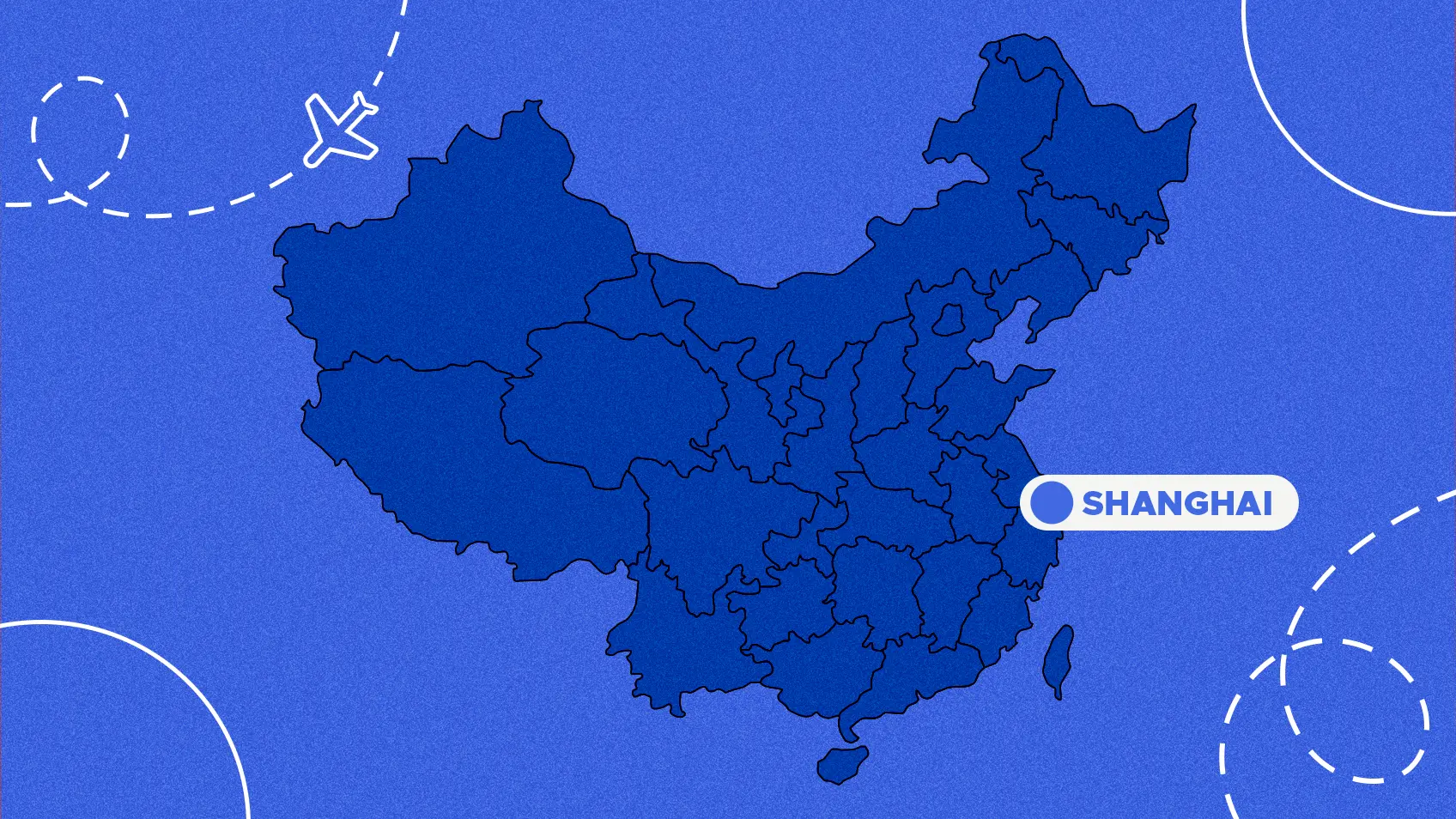
Who Should Consider Hiring in Shanghai?
If you work in finance, tech, manufacturing, biomedicine, logistics or digital services, Shanghai is often the top place to hire in China. Why? Because you get:
- A massive pool of skilled workers
- Top universities churning out fresh talent
- Excellent English speakers and R&D know-how
If you need smart, internationally minded staff or want to plug straight into China's innovation and export machine, Shanghai ticks every box.
Before you jump in, know this: Shanghai's talent doesn’t come cheap. Here’s what you need to watch out for:
- Salaries are the highest in China. You'll pay a premium for top people, and benefits expectations are just as steep.
- Fierce competition for talent. Every major player wants the same skilled workers, so turnover can be high. You’ll need to offer more than just a pay packet to keep your best people.
| Best For | Think Twice If... |
|---|---|
| High-tech, finance, R&D, logistics, global services | Cost is your top concern |
| Firms seeking global connectivity and innovation | Your business can thrive in lower-cost cities |
| Companies needing top-tier, English-speaking talent | You want potentially lower turnover |
Talent Profile
Shanghai's workforce is among the most highly educated in China, consistently ranking at the top for both average years of schooling and the proportion of university graduates.
English Proficiency
Shanghai is near the top of the Chinese mainland in English proficiency, with a score of 511 on the EF English Proficiency Index (2026). This places the city behind Hangzhou (517), level with Nanjing (511) and just above Beijing (509).
Nevertheless, Shanghai's score of 511 places it in the " moderate" proficiency category. Foreign companies should expect some language barriers and may need to provide additional training or support for roles that require strong English skills.
Wages
Shanghai's workforce commands some of the highest salaries in China.
The average monthly wage for all employees in Shanghai was 12,577 yuan ($1,885) in 2025, according to figures the city published in August 2026.
Minimum Wage
Shanghai's minimum wage is 2,740 yuan per month, the highest in China, with an hourly minimum wage of 25 yuan per hour. Both rates have applied since July 1, 2025.
Social Insurance
As with the rest of China, social insurance contributions in Shanghai are based on the monthly salary your employee is paid.
However, there are minimum and maximum limits set by the Shanghai government:
- Minimum base: 7,546 yuan per month
- Maximum base: 37,731 yuan per month
If an employee's actual monthly salary is below 7,546 yuan, you must calculate contributions as if they earn 7,546 yuan. If their salary exceeds 37,731 yuan, contributions are capped at 37,731 yuan. These limits apply from July 2026 to June 2027.
Example:
- If you hire someone at 6,000 yuan per month, you contribute as if their salary is 7,546 yuan
- If you hire someone at 40,000 yuan per month, you only contribute up to the 37,731 yuan cap
Here's how it breaks down:
| Insurance Type | Employer Rate | Employee Rate |
|---|---|---|
| Pension | 16% | 8% |
| Medical (Including maternity insurance) | 9% | 2% |
| Work Injury | 0.2%–1.9%* | 0% |
| Unemployment | 0.5% | 0.5% |
*Shanghai's work injury insurance rates are determined by the risk classification of each industry, ranging from 0.2% to 1.9% of payroll, with adjustments based on risk and claims.
Housing Fund
Employers and employees in most companies can jointly choose a basic housing fund contribution rate between 5% and 7%, as long as both sides use the same rate.
- The minimum base is 2,740 yuan/month, and the maximum is 37,731 yuan/month (July 2026 to June 2027)
- Both employer and employee contribute the same percentage, chosen between 5% and 7%
| Actual Salary | Contribution Base | If Rate is 5% | If Rate is 7% |
|---|---|---|---|
| 2,000 yuan | 2,740 yuan | 137.00 yuan | 191.80 yuan |
| 10,000 yuan | 10,000 yuan | 500 yuan | 700 yuan |
| 40,000 yuan | 37,731 yuan | 1,886.55 yuan | 2,641.17 yuan |
To understand how these figures impact your company payroll cost, please use our salary calculator!
Leave Policies
Shanghai sticks closely to China’s national rules for time off, but adds its own twists in a few key areas:
When it comes to marriage leave, Shanghai is generous. Employees get a total of 10 days off for tying the knot: the national law grants 3 days, but the city adds a local bonus of 7 more.
For new mums, the national standard is 98 days, but Shanghai adds 60 days of extra leave, bringing the total to 158 days, or just over five months. Both parents also get 5 days of parental leave each year until their child turns 3.
New dads aren’t left out either. Shanghai offers 10 days of paternity leave, to be taken during the mother's maternity leave.
Annual Leave
Follows the national standard:
- 5 days per year if the employee has worked 1–10 years
- 10 days for 10–20 years of service
- 15 days for over 20 years of service
Tip: Multinational and foreign companies in China often offer extra leave as a perk to compete for skilled workers.
Sick Leave
Sick leave entitlements depend on the employee’s length of service and medical documentation. Employees may receive between 3 and 24 months of sick leave with partial pay, as set by local regulations.
High Temperature Subsidy
Shanghai has a mandatory high temperature subsidy for employees working in hot conditions.
- Employers must pay this subsidy to employees working outdoors when temperatures reach 35 degrees Celsius or above, or indoors if the workplace cannot be cooled below 33 degrees Celsius.
- The subsidy is 300 yuan per month, paid from June to September.
The subsidy must be paid in cold, hard cash.