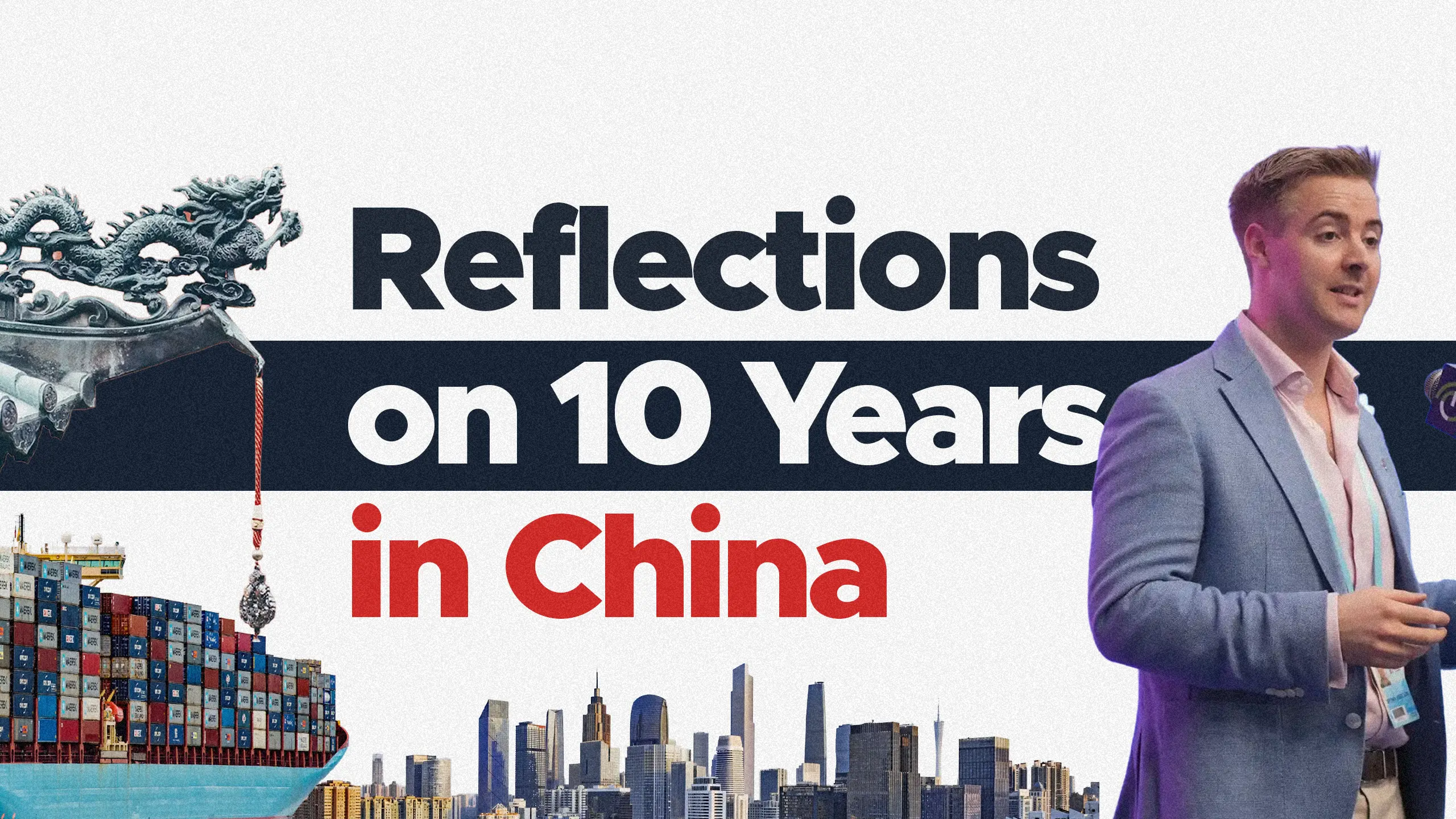
Ten years in China — what a journey. In 2016, as I stepped off the plane into a sweltering July in Changsha, I was full of ideas, passion and a drive to do something great in China. I followed a Chinese school friend into a business I knew nothing about, in a country whose language I could not speak.
Looking back, the odds of success were not high, but my thirst for understanding this country was so strong that I used to hoover up every insight I could get from my business partner and childhood friend.
We set up two businesses: one a cross-border e-commerce business selling imported goods into China, the other a supply chain finance business providing advanced tax rebates to exporting manufacturers. I knew very little about either. Although the supply chain finance business did well, the e-commerce venture closed within six months, and it taught me a key lesson:
China’s market is big, but the competition is greater.
Over the last 10 years I have seen how innovative ideas get hijacked and markets flooded in the relentless race for share. For me it started with shared bikes — remember Ofo and Mobike? But now you see it in every corner of business: coffee shops, restaurants, cars and gadgets.
As someone lucky enough to have been born and raised in an economically developed country, the rat race on steroids from entrepreneurs who started with a lot less than me is fascinating to watch, but not something I could ever compete in, no matter how high my ambition. The competition is stronger than ever right now, which is why Chinese companies are looking to “go global” into less saturated markets.
Like most foreign businesses in China, I learnt to find the gaps. My time here can be split into a pre-Covid and a post-Covid era.
Pre-Covid was defined by learning and exploring. Living in Changsha, Shanghai and Beijing during those years, I tried many different businesses and initiatives, and worked with many different partners.
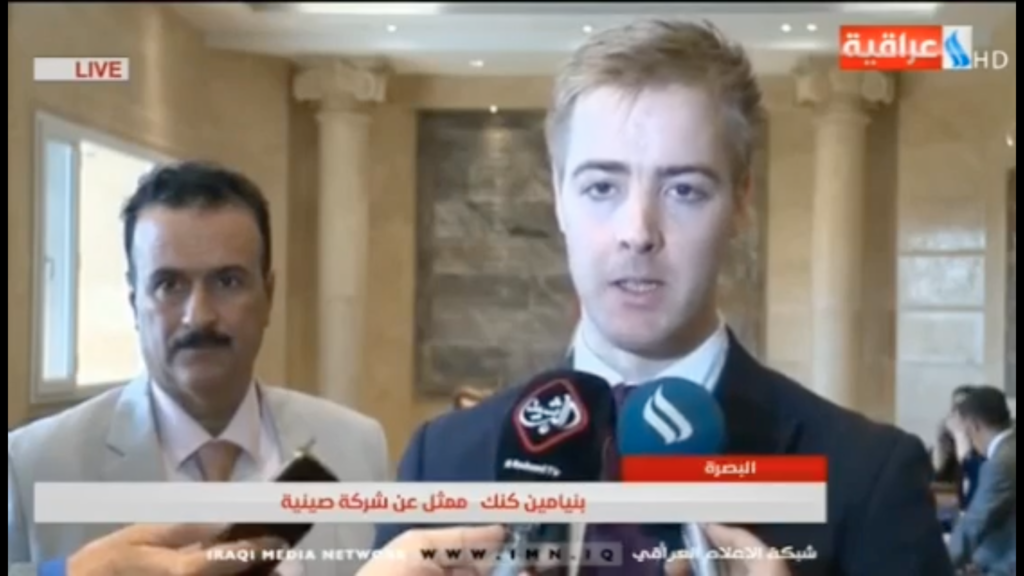
Beijing was a huge learning curve, and I was fortunate to be there at the height of the Belt and Road Initiative, working on projects to rebuild Iraq. I cannot stress enough how important living and experiencing life in Beijing is to understanding China, and I encourage more people to spend time there.
I stopped at nothing to gain experience and learn. I even found myself discussing the plight of Basra’s water challenges on Iraqi national television! The pale complexion on my face says it all.
Building relationships and collaborating with Chinese EPC firms taught me a great deal about China and about doing business here. One manager from a state-owned firm taught me something that still shapes our HR business today:
In the West, you have a project, so you search for the people. In China, there are a lot of people, so you search for the project.
China’s population is vast. The demographics are changing, of course, but everywhere I look I see construction, infrastructure projects and all manner of jobs. Is it simply the largest job creation scheme the world has ever seen?
All this learning — and supporting companies to work and do business in China — proved important training for one of the largest events in my life, and everyone’s: Covid-19.
My wife and I decided to remain in China. Many foreign business people had left for Chinese New Year, or in response to the initial scare of lockdown. Through that period of uncertainty and global crisis, I was able to support companies on the ground as they navigated supply chains that were becoming increasingly opaque. We supported businesses across every sector, from electronics, energy and medical equipment to clothing and furniture.
Although I had built a solid foundation for doing business in China, I realised it was not sustainable. In reality I was only scratching the surface of these industries, and I did not have the deep product or engineering capability to challenge suppliers when necessary.
So I decided to pivot: I could hire the people who did. That is how Kinyu SCM was founded — a supply chain company with people-focused solutions. We know enough to understand the challenges within our customers’ supply chains, and to build the right hiring strategy around them. We moved to Guangzhou to base our operations in one of China’s manufacturing heartlands.
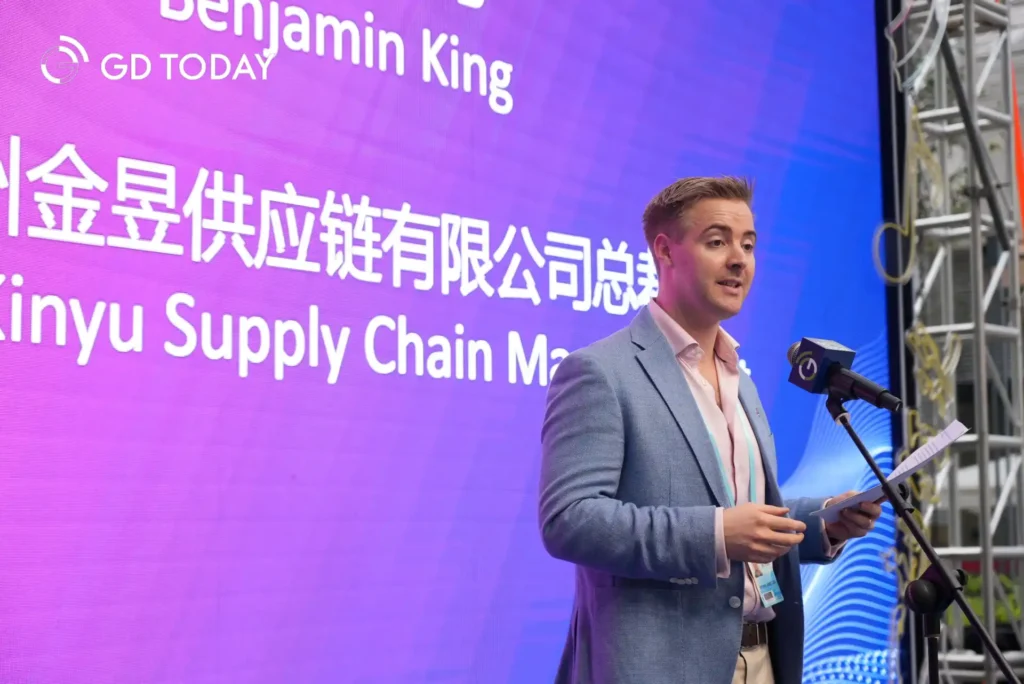
Today we have seven offices, hire more than 50 strategic supply chain professionals across multiple industries, and manage over $170 million in trade each year while adding significant value for our customers. Relationships matter, but who you go into business with is a decision with lasting consequences for both your professional and personal life. People say it all comes down to trust — which brings me to another key lesson I have learnt in China:
Trust comes in two forms: trust in someone’s integrity, and trust in someone’s ability. For a successful business relationship, both must be present.
While my school friend brought me to Changsha, the biggest impact on my journey in China — and on my life — has of course been my incredible wife and business partner, Mia. We have made all the important decisions together, many of them life-changing. I am so grateful for all the support she has given me, and continues to give me, as we build our business and our family together.
Here’s to another 10 years.