Yiwu confounds the usual categories. It isn’t a provincial capital. It isn’t even a prefecture-level city — administratively, it’s a county-level city sitting under Jinhua in central Zhejiang. By the standard tier system you might expect it to be a minor entry. Yet Yiwu hosts the largest small-commodities wholesale market on earth, trades with more than 230 countries and regions, and posts the highest urban disposable income of any county-level city in China.
Yiwu is a trading city first and a manufacturing city second. Its workforce skews towards sales, sourcing, logistics, cross-border e-commerce and international trade services. It also has one of the most genuinely international street-level business cultures in China, with thousands of long-term foreign resident traders.
Here’s what you need to know before hiring.
Quick Facts
| Category | Details |
|---|---|
| City Tier | County-level city under Jinhua prefecture, Zhejiang province |
| Dialect | Mandarin |
| Population | Approx. 1.9 million |
| Airports | Yiwu Airport (IATA: YIW) |
| Logistics Infrastructure | China-Europe (“Yixinou”) freight rail terminus; major cross-border e-commerce and express-parcel hub; part of the China (Zhejiang) Pilot Free Trade Zone |
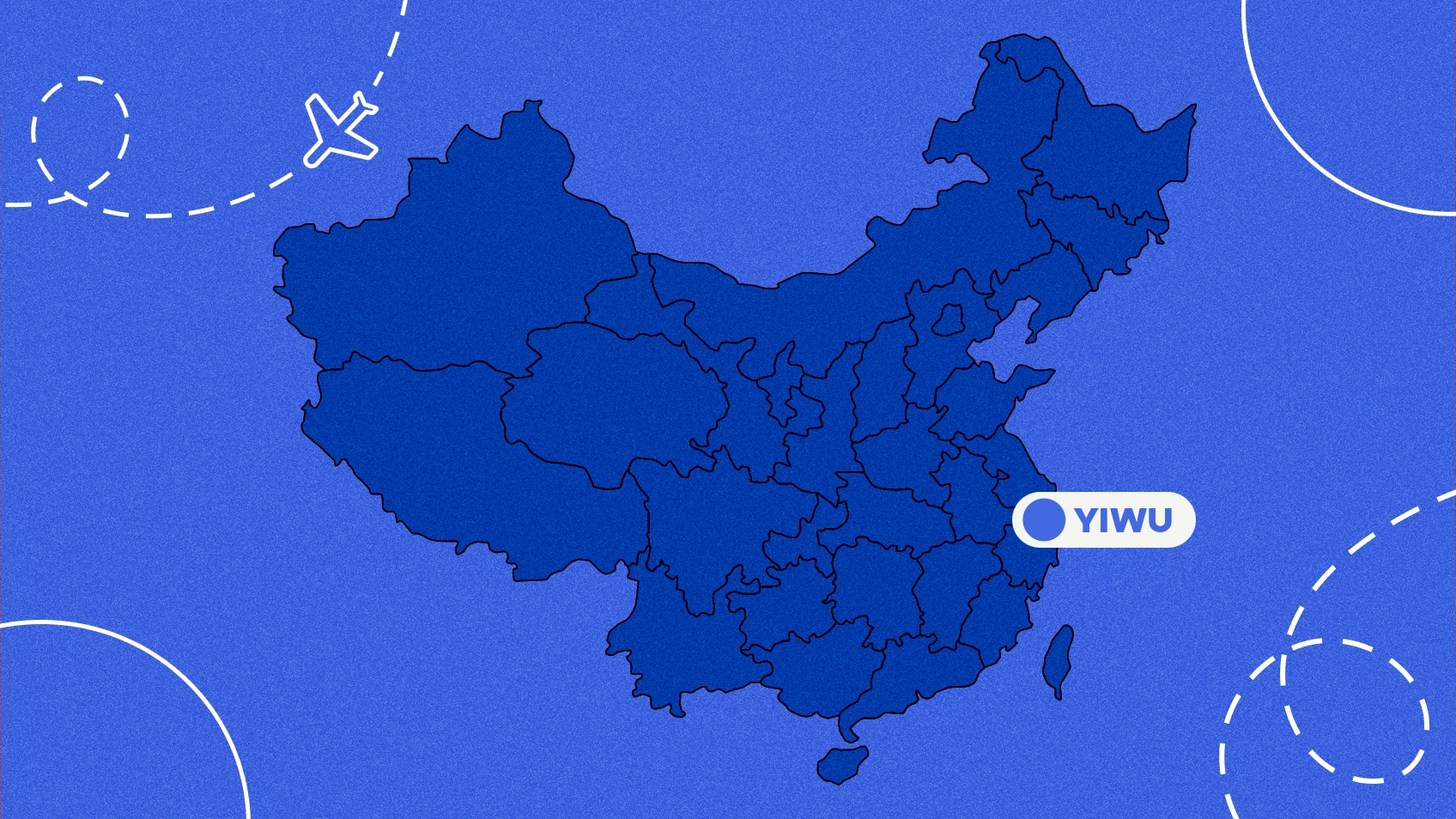
Who Should Consider Hiring in Yiwu?
Yiwu works best for companies in international trade, sourcing and procurement, cross-border e-commerce, logistics and freight forwarding, and light-consumer-goods sales. If your business involves buying, branding or shipping small commodities (jewellery, toys, stationery, gifts, accessories, hardware, homeware, seasonal goods) Yiwu is arguably the single most efficient place in the world to base that operation.
The city’s commercial gravity comes from the Yiwu International Trade City, a wholesale complex of 75,000-plus booths trading millions of product lines. Around it has grown a dense ecosystem of trading companies, sourcing agents, logistics providers, quality-inspection firms and e-commerce operators. Major domestic and international e-commerce platforms run regional service centres and warehouses in the city.
What Yiwu is not is a heavy-manufacturing or high-tech base. Many of the “factories” associated with Yiwu are actually trading companies, or sales offices for plants located elsewhere in Zhejiang. If you need precision engineering, large-scale electronics assembly or a deep technical-graduate pool, this isn’t the city for it.
Talent Profile
Yiwu’s talent pool is shaped by trade rather than industry. Its standout characteristic is language capability: because the market serves buyers from the Middle East, Africa, South Asia, Latin America and Europe, the city has an unusually deep bench of multilingual sales and trade staff, including Arabic, Spanish, Russian and other languages rarely found at scale elsewhere in China.
| Job Type | Popular Roles |
|---|---|
| International Trade & Sales | Foreign trade salespeople, sourcing agents, merchandisers, multilingual customer service, market booth operators |
| Cross-Border E-Commerce | Platform operations specialists, listing and content managers, digital marketers, livestream sales hosts |
| Logistics & Freight | Freight forwarders, customs and bonded-zone specialists, warehouse managers, express-parcel operations |
| Light Manufacturing | Production supervisors, QC inspectors, plant operators (jewellery, toys, accessories, stationery, textiles) |
English Proficiency
Zhejiang scores 506 on the EF English Proficiency Index, placing it just below Hong Kong (538) and among the stronger-performing regions in China — nearby Hangzhou is the country’s top-scoring city. EF doesn’t track Yiwu specifically. However, because the market serves buyers from the Middle East, Africa, South Asia, Latin America and Europe, the city has an unusually deep bench of multilingual sales and trade staff, including Arabic, Spanish, Russian and other languages seldom found at scale elsewhere in China.
Salaries
The minimum wage is 2,660 yuan per month ($368) and 25 yuan per hour ($3.46) for part-time work, effective from 1 January 2026.
The city recorded urban per-capita disposable income of 97,170 yuan in 2024, the highest of any county-level city in China, and a figure that exceeds all four tier-one cities. This reflects a population with a high share of business owners, traders and commission-earning sales staff rather than a conventional salaried wage profile
Social Insurance
Yiwu follows Zhejiang’s provincial social insurance framework. The contribution base (the salary figure used to calculate contributions) is bounded by floor and ceiling values (currently 4,986 – 25,299 yuan) set by the province and updated annually.
Example:
- If you hire someone at 8,000 yuan per month, their pension contribution is calculated on their full salary. However, if you hire someone at 30,000 yuan per month, their pension contribution is calculated as if they earn 25,299 yuan (the maximum base).
Here’s how the contribution rates break down:
| Insurance Type | Employer Rate | Employee Rate |
|---|---|---|
| Pension | 16% | 8% |
| Medical (incl. maternity insurance) | approximately 8–9.5% | 2% |
| Work Injury | 0.2–1.9% (industry-rated) | 0% |
| Unemployment | 0.5% | 0.5% |
Housing Fund
Both employers and employees contribute to the housing fund in Yiwu. The contribution rate is set between 5% and 12%, with both parties using the same rate. Each company chooses one rate, applied uniformly across all employees. The contribution base is bounded by a local floor (linked to the minimum wage) and a ceiling (linked to three times the local average wage), and is adjusted annually.
To understand how these figures impact your company payroll cost, please use our salary calculator!
Leave Policies
Yiwu follows Zhejiang’s provincial leave rules.
| Leave Type | Entitlement | Notes |
|---|---|---|
| Marriage Leave | 3 days | Per national standard. In Zhejiang, calculated in working days, excluding weekends and public holidays |
| Maternity Leave | 158 days (first child) / 188 days (second or third child) | 98 days national + 60 provincial for a first child; 98 + 90 for a second or third. Difficult births add 15 days; multiple births add 15 days per additional baby |
| Paternity Leave | 15 days | Wages, bonuses and benefits paid as normal by the employer |
| Parental Leave | 10 days per year, each parent | Available to both parents annually until the child turns 3, with pay and benefits maintained |
| Annual Leave | 5–15 days | Follows national standard, based on years of service |
Sick Leave
Sick leave entitlements depend on the employee’s length of service and medical documentation. Sick-leave pay cannot be lower than 80% of Yiwu’s local minimum wage.