A month after Donald Trump and Xi Jinping wrapped up their two-day summit in Beijing, the verdict among analysts is largely dismissive.
“I don’t think there was a lot of tangibles that people could really base decisions on. So they’re just moving on now,” Eric Olander, editor-in-chief of The China-Global South Project, told the Sinica Podcast last month. The Atlantic Council’s verdict was blunter: “It was a big show — with little to show for it.”
When Trump threatened a separate 10%-12.5% tariff on dozens of countries, including Chinese imports, over forced labour practices last week, it seemed to confirm the cynics. Yet one item from the summit has actually moved forward. And it may be consequential for Chinese suppliers.
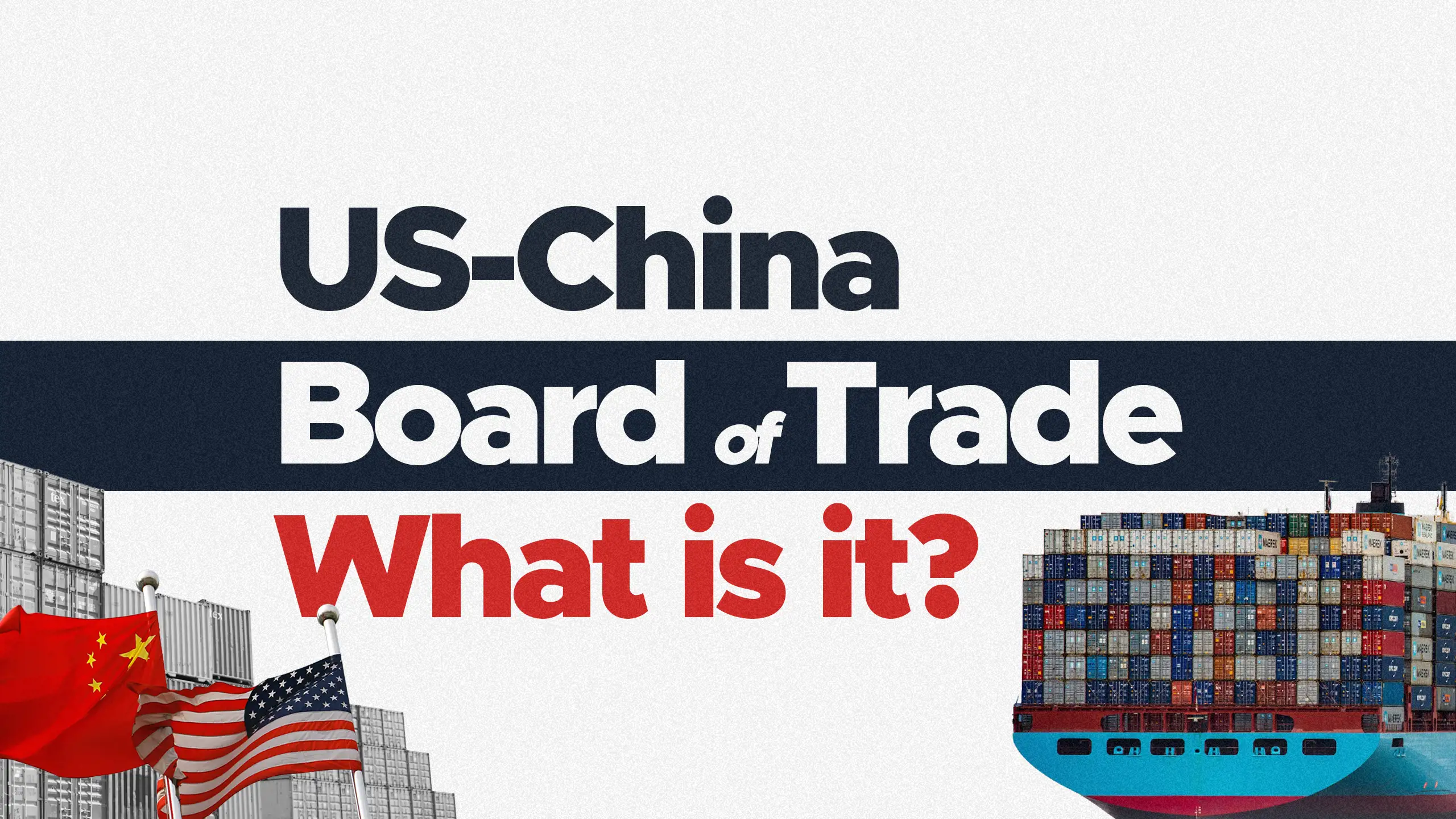
US-China Board of Trade
On June 5, the Office of the U.S. Trade Representative published a notice in the Federal Register opening a public comment period on the newly established U.S.-China Board of Trade. Comments are due July 10, with rebuttals accepted until July 27.
The mechanism, agreed by Trump and Xi as part of the Beijing summit package, was described by the White House as the “cornerstone” of the bilateral economic agreement. The idea is simple. Under it, both sides will identify $30-$50 billion worth of the other’s goods that both governments will agree not to tariff.
Total U.S.-China goods trade came to $414.7 billion in 2025, according to the U.S. Trade Representative’s office. So each side’s basket of $30 billion represents roughly 7% of the total relationship — or about 14-15% combined. It is, by any measure, a narrow corridor. Though observers estimate this would just be a start.
“The non-sensitive basket is just such a small part now of our overall trade with China. So maybe this Board of Trade, maybe it starts with that and expands in the future,” said Wendy Cutler, a former USTR negotiator who heads the Asia Society Policy Center in Washington, as quoted by Reuters.
So What Goes in the Basket?
Yet, no matter how small, the significance of that corridor depends entirely on what goes in it. For instance, $30 billion in soybeans is not the same as $30 billion in semiconductors.
“We think the Chinese side will focus those reductions on U.S. agricultural products,” said Even Rogers Pay, a director at Trivium China, told Reuters. “The $17 billion purchase agreement and 25 million metric tons soybean deal, together, would roughly total out to just over $30 billion.”
That would mean the Board of Trade, at least from Beijing’s side, is essentially an agricultural trade mechanism. And a political win for Trump’s farm state base.
On the American side, testifying before the Senate Finance Committee on June 3, U.S. Treasury Secretary Scott Bessent offered an indication of what the Washington’s non-sensitive basket might contain.
“What are $30 billion of things in non-critical industries, non-critical things — fireworks, Halloween costumes, very low-end consumer items that we do not want to reshore, that we want to buy from them,” he said. “And what are things that they would like to buy from us — the seafood, maybe energy — and then we will both agree that that basket on either side will have no tariffs.”
Bessent has repeatedly mentioned energy as a likely component of what China might buy from the U.S., though plastic skeletons for liquefied natural gas seems unlikely to be the deal Beijing had in mind.
Bessent’s examples may have been chosen for their political optics, but the category of low-end consumer items he is describing is considerably broader. Section 301 List 4A — the USTR’s existing tariff schedule covering consumer goods and apparel at 7.5% — is the natural hunting ground for a non-sensitive designation. Products on that list include smart speakers, Bluetooth headphones, bed linens, multifunction printers and footwear: goods for which a national security argument is difficult to sustain.
An Awkward Win for ‘America First’
The economic consequences of all this would be relatively modest. But imagine the U.S. carves out consumer goods and China reciprocates with agricultural products. What would that actually mean in practice?
Coface, the French credit insurer, noted in November 2025 that tariff reductions could nudge Chinese exports of textiles, toys and low-margin goods back toward the U.S. market.
For China’s small export manufacturers — who bore the sharpest edge of the tariff war — a tariff carve-out for low-end consumer goods would be welcome news. For businesses sourcing from China but selling outside the U.S., the indirect effect may be that a stabilized U.S. export lane reduces the pressure on Chinese suppliers to discount aggressively into other markets.
But there is an awkward political optic here. As recently as October 2025, White House spokesperson Kush Desai was telling reporters — ironically in response to questions about the rising cost of Halloween costumes — that cheap Chinese imports were the antithesis of the Trump economic vision: “Real prosperity is good jobs, booming industry, and thriving communities for everyday Americans — not cheap Chinese imports.”
So, the biggest winner from the Board of Trade may be that very import-driven retail model that fueled so much of MAGA’s political energy in the first place. Trump, however, is no policy purist. A functioning Board of Trade, with a product list attached, would give him something concrete to show when Xi arrives in Washington for a state visit on Sept. 24. A deal is a deal.