Hong Kong is one of the simplest places in Asia to set up an entity and hire staff, but it runs on a legal and HR framework that is very different from the Chinese mainland.
Instead of social insurance and housing fund, employers must navigate the Employment Ordinance and mandatory MPF retirement contributions. On top of that, Hong Kong has its own quirks, from the continuous contract “468 rule” to the distinction between statutory and public holidays.
Here’s a breakdown:
Quick Facts
| Category | Details |
|---|---|
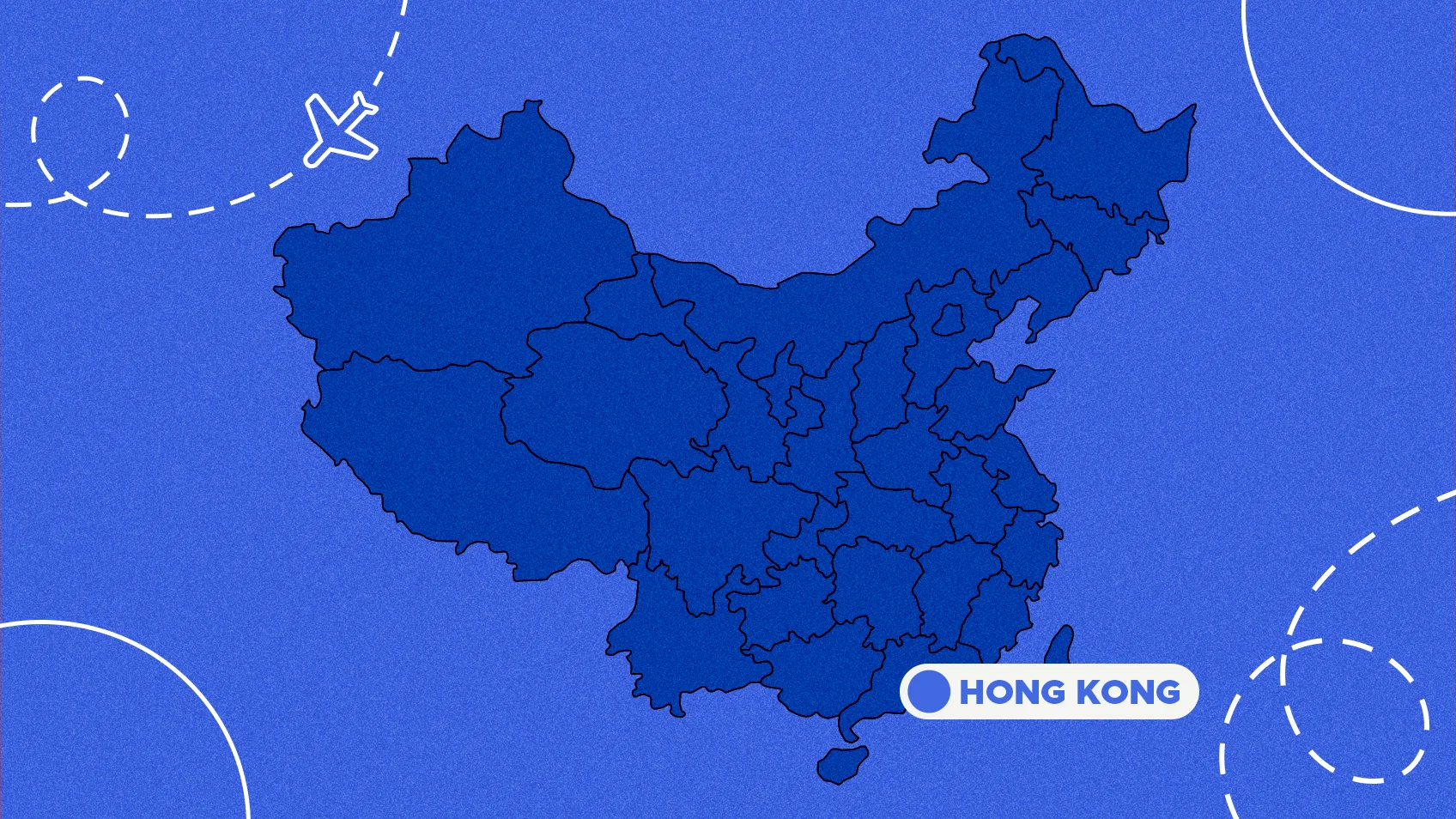
| Status | Special Administrative Region of China; separate common-law legal system under “one country, two systems” |
| Dialect | Cantonese and English; widespread Mandarin in cross-border roles |
| Population | About 7.53 million (mid-2025) |
| Logistics Infrastructure | Hong Kong International Airport (HKG), high-speed rail link to many mainland cities, major container port |
Ready to Hire in Hong Kong?
Skip the entity setup. Our Employer of Record service covers contracts, payroll, MPF, and compliance from day one. You hire the talent. We handle the paperwork.
Who Should Consider Hiring in Hong Kong?
Hong Kong offers international companies what mainland cities often lack: fluent English speakers, common-law courts and a regulatory system foreign investors understand.
Many firms split their footprint: production and back-office roles in lower-cost Greater Bay Area cities; front-office, management, and client-facing functions in Hong Kong. This balances cost with access to capital, talent, and regulators.
| Best For | Think Twice If… |
|---|---|
| Regional HQs, finance, trading, professional services | You mainly need large numbers of lower-cost operational staff and can base them in the mainland instead |
| Roles requiring high English proficiency and cross-border client interaction | Your business model depends on strict cost minimization rather than speed, flexibility, and access |
| Companies using Hong Kong as a holding or treasury center with a small but senior local team | You need heavy manufacturing, warehousing, or land-intensive operations (space is scarce and expensive) |
Talent Profile
Hong Kong ranks 39th on the EF English Proficiency Index with a score of 538, above all Chinese mainland cities, though some are narrowing the gap, including Hangzhou (515), Beijing (514) and Nanjing (512).
The city trails regional rival Singapore, which was reclassified as a native English-speaking country by EF in 2025, as well as Malaysia (24th) and the Philippines (28th), despite English being an official language in the former British colony.
Nevertheless, English’s official status means contracts, court documents and compliance materials are widely available in both languages, facilitating operations for foreign businesses.
In practice:
- Cantonese is the dominant everyday language.
- English is routine in banking, law, professional services, and multinational environments.
- Mandarin is increasingly important in roles tied to mainland clients and regulators.
HR implication: For client-facing and regional roles, you can realistically hire for trilingual capability (Cantonese, English, Mandarin), but these candidates are heavily competed for and command a premium.
The Legal Basics
Four laws do most of the heavy lifting in Hong Kong HR:
The Employment Ordinance covers the big stuff — contracts, leave, termination, severance. Think of it as Hong Kong’s equivalent of mainland China’s Labour Contract Law, except it runs on common law rather than civil law. The Minimum Wage Ordinance sets the hourly floor. The MPF Ordinance handles retirement contributions (more on that below). And the Employees’ Compensation Ordinance covers work injuries.
One thing to note: you can structure employment contracts fairly flexibly in Hong Kong, but you can’t contract out of statutory rights. Any clause that tries to water down what the Employment Ordinance guarantees is void.

The “468 Rule” (New from January 2026)
This one matters. Hong Kong draws a hard line between casual workers and employees on a “continuous contract.” If someone qualifies as continuous, they get the full set of statutory entitlements: rest days, annual leave, sick pay, holidays, severance.
The old rule (the “418”) set that threshold quite high. The new “468 rule,” in effect from January 18, 2026, brings it down. Now an employee is on a continuous contract if they work at least 17 hours per week for 4 consecutive weeks, or at least 68 hours over any 4-week period for the same employer.
The practical impact: a lot of part-timers and casual staff who were previously outside the threshold are now inside it. If you’re using part-time or flexible workers, check whether your current arrangements now trigger continuous-contract obligations. Budget accordingly.
Working Hours and Overtime
Hong Kong doesn’t cap weekly working hours for adults. Most offices run 40–48 hours per week, and overtime is governed by your contract and company policy, not by statute.
Continuous-contract employees must get at least one rest day (24 consecutive hours) every seven days. There are strict limits for workers aged 15–17.
Overtime premiums aren’t mandatory across the board. In professional roles, people are typically salaried with no separate overtime pay. For lower-wage hourly roles, define overtime rates clearly in the contract — don’t leave it ambiguous.’
Pay and Mandatory Benefits
Salaries
Hong Kong is a high-income, high-cost city. GDP per capita in 2025 was around $56,844, placing it amongst the world’s richer economies.
In terms of average salaries: Public sector employees earned an average of 114,597 yuan ($16,077) in 2024, while private sector workers earned 78,612 yuan ($11,030).
Median monthly wages stand at around $2,600, with managers and professionals earning roughly $4,000, compared with $1,800-$2,000 for elementary and service roles.
| Metric | Figure |
| Median monthly wage | HK$20,500 (US$2,600) |
| Median hourly wage | HK$82.9 (US$10.60) |
| Managers, professionals, associate professionals | HK$31,600/month (US$4,050) |
| Elementary occupations | HK$14,300/month (US$1,830) |
| Service and sales workers | HK$15,300/month (US$1,960) |
Statutory Minimum Wage
Hong Kong’s statutory minimum wage (SMW) is set on an hourly basis. From May 1, 2025, the SMW is HK$42.10 per hour, up from HK$40. The monthly wage threshold above which employers are exempt from keeping detailed records of working hours will rise to HK$17,200.
SMW applies to almost all employees, with certain limited exceptions. You must ensure that total wages divided by total hours worked in a wage period don’t fall below the SMW rate.

MPF Retirement Contributions
The Mandatory Provident Fund (MPF) is Hong Kong’s compulsory private pension system. Employees aged 18 to 64 who are employed for 60 days or more must be enrolled in an MPF scheme, unless exempt (for example, some foreign employees covered by equivalent overseas schemes).
As of 2025, the standard MPF contribution structure is:
| Monthly Relevant Income | Employer | Employee | Total |
| HK$7,100 or below | Not required | Not required | HK$0 |
| HK$7,100–HK$30,000 | 5% of income | 5% of income | 10% total |
| HK$30,000 or above | HK$1,500 (capped) | HK$1,500 (capped) | HK$3,000 total |
HR implication: MPF adds a predictable 5% on top of gross salaries up to the income cap. For high earners, the cost is capped and becomes less significant as a percentage of total compensation.
Leave and Time Off
Annual Leave
Employees under a continuous contract who complete 12 months’ service are entitled to paid annual leave. The statutory entitlement scales with length of service:
| Years of Service | Statutory Paid Annual Leave |
| 1–2 | 7 days |
| 3 | 8 days |
| 4 | 9 days |
| 5 | 10 days |
| 6 | 11 days |
| 7 | 12 days |
| 8 | 13 days |
| 9 or more | 14 days |
IMPORTANT: Most white-collar employers offer 14–20 days from day one to remain competitive. If you’re only offering the statutory minimum, you’ll struggle to attract experienced professionals.
Statutory Holidays vs. Public Holidays
This catches people out. Hong Kong distinguishes between statutory holidays (the minimum you must grant) and general public holidays (the wider list). They’re not the same thing.
From 2026, Hong Kong has 15 statutory holidays, with Easter Monday newly added. These include Lunar New Year days, Ching Ming, Labour Day, Buddha’s Birthday, Tuen Ng, HKSAR Establishment Day, the day after Mid-Autumn Festival, National Day, Chung Yeung, and Christmas (or Winter Solstice) plus the first weekday after Christmas.
If a statutory holiday falls on a rest day, you must give a paid day off in lieu on another day that is not a rest day. Many white-collar employers grant all general public holidays — but you can never offer fewer than the statutory minimum.
Sick Leave
Employees under a continuous contract accumulate paid sickness days: 2 per completed month during the first 12 months, then 4 per month after that, up to a maximum of 120 days. Sickness allowance is 80% of average daily wages over the preceding 12 months.
Sick leave must usually be supported by medical certificates and meet minimum length requirements under the Employment Ordinance.
Maternity Leave
Female employees under a continuous contract get 14 weeks of statutory maternity leave, generally starting 2 to 4 weeks before the expected due date. Maternity leave pay is 80% of average daily wages. Employers can apply for government reimbursement of maternity leave pay for the 11th to 14th weeks, capped at HK$80,000 per employee.
Paternity Leave
Eligible male employees under a continuous contract get 5 days of statutory paternity leave per childbirth, to be taken within the period from 4 weeks before the expected delivery date to 14 weeks after the actual date of birth. Pay is 80% of average daily wages, provided the employee has at least 40 weeks of continuous service.
Termination, Severance, and Long-Service Payments
Notice Periods
During the first month of probation, either party may terminate without notice or payment in lieu, unless the contract says otherwise. After the first month of probation, at least 7 days’ notice is required, even if the contract specifies a shorter period. If no notice period is specified, the default minimum is one month for contracts renewable from month to month.
Severance and Long-Service Payments
Severance payment is usually payable when an employee with at least 2 years of service is dismissed by reason of redundancy or laid off.
Long-service payment is generally payable when an employee with at least 5 years of service is dismissed for reasons other than serious misconduct or redundancy, when a fixed-term contract isn’t renewed, when the employee resigns on medical grounds, retires at 65 or older, or dies.
If an employee qualifies for both, the employer pays only one — typically the higher amount. The formulas and upcoming changes to offsetting arrangements with MPF contributions are technical; take specific legal advice when planning restructurings or large-scale redundancies.
Practical HR Tips for Hong Kong
Budget beyond base salary. Incorporate MPF, potential bonuses, and market-competitive leave packages when building your cost model. Median wages have been rising steadily in real terms.
Clarify working time expectations up front. Long working hours are common in finance, law, and professional services. Candidates expect clarity on overtime, time off in lieu, and flexible arrangements. Put this explicitly in contracts and employee handbooks.
Align your leave policy with the market, not just the law. The statutory minimums are modest. Many employers offer 14–20 days of annual leave for professional staff, all general public holidays, and enhanced maternity/paternity leave beyond the statutory minimum.