China’s currency is climbing, which sounds like bad news for anyone sourcing there. The real story, however, is more complicated.
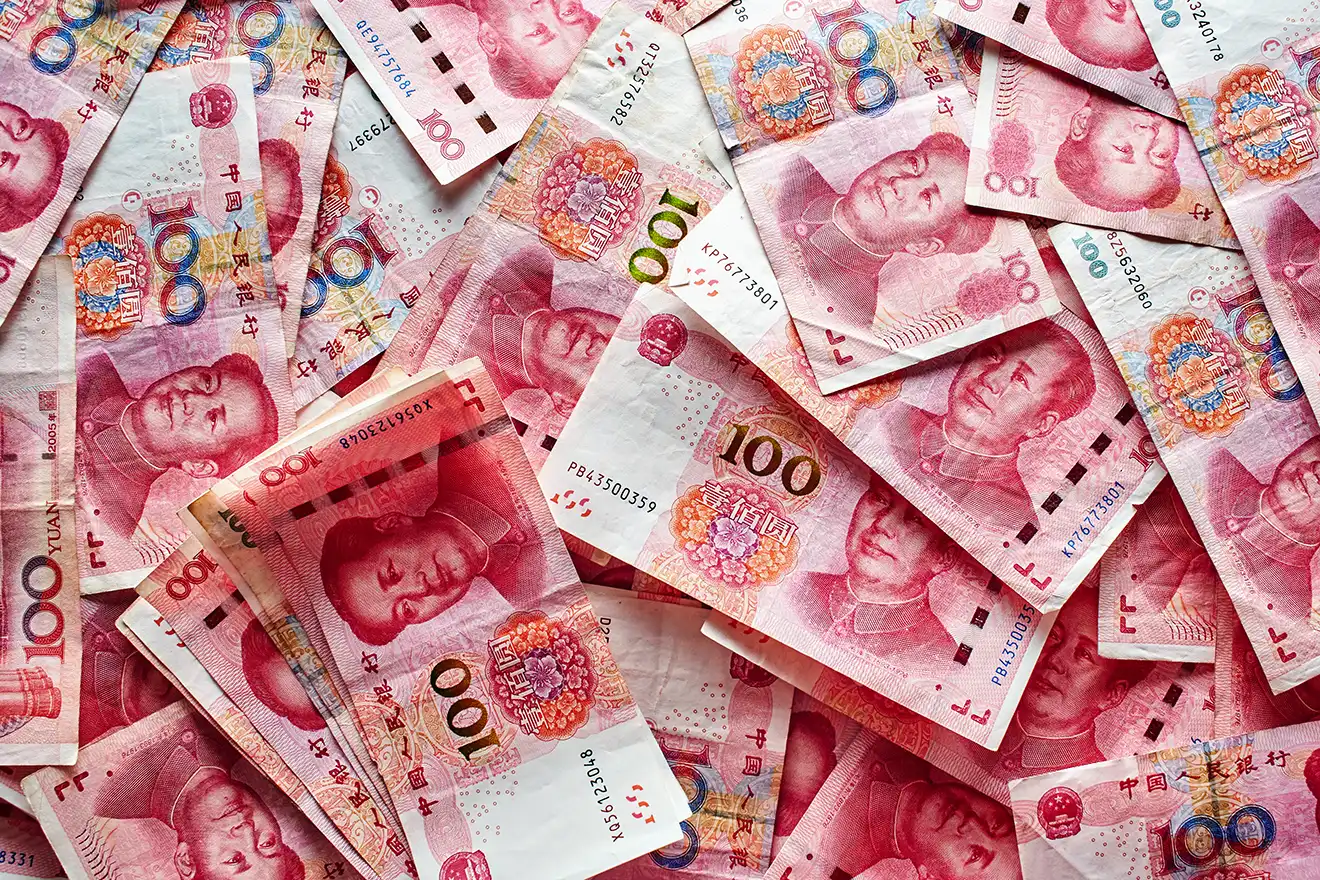
The yuan has gained roughly 5% against the dollar over the past year, trading at around 7.00 per U.S. dollar in early January 2026, its first sustained appreciation since 2021.
A weaker dollar, equity inflows and firmer daily fixings from the People’s Bank of China have all contributed to the rise. And many economists expect the trend to continue. Goldman Sachs reckons the currency remains 25% undervalued.
For international buyers paying in dollars, this climb makes Chinese goods marginally pricier than when the rate sat comfortably above 7.10. Yet the picture is murkier than a simple currency chart suggests.
Against the euro, the yuan has actually fallen roughly 7% over the same period. So is the yuan strengthening, or is the dollar just weak? A sliding dollar should raise procurement costs everywhere, making China look relatively better.
But the dollar hasn’t weakened everywhere. It fell 9.5% against a basket of major currencies last year, yet it gained 3% against the Vietnamese dong and 5% against the Indian rupee. This means, in dollar terms, competitors in India and Vietnam just got cheaper compared to their Chinese counterparts.
Economists, however, see little reason for concern among buyers sourcing from China. The IMF argued last month that low Chinese inflation had driven real exchange rate depreciation in recent years, leaving the yuan particularly cheap. Goldman’s Teresa Alves wrote in December that even a 25% appreciation would keep Chinese manufacturers “comfortably in inexpensive territory” relative to Vietnam or India.
China’s manufacturing base will almost certainly remain competitive even if the yuan strengthens. The currency has too far to climb before it erodes the country’s structural advantages: the logistics networks, the supplier ecosystems, the sheer density of industrial capability. And few buyers choose China on price alone; they source from China because it is fast, reliable and deeply integrated into global supply chains. A slightly stronger yuan won’t change that.
What This Actually Means for Buyers
So, what’s the issue with a rising yuan then? The bigger problem is that squeezed Chinese manufacturers face yet another margin hit at precisely the wrong moment.
Chinese exporters are facing a remarkably hostile environment. U.S. trade relations have calmed for now, but the tariff threat hasn’t gone away. Domestic competition is intensifying as too many factories chase too few orders, forcing manufacturers into brutal price wars. A sweeping VAT overhaul has closed the rebate loopholes some suppliers depended on to stay profitable. And recent policy shifts have made social insurance contributions effectively non-negotiable, adding 30-40% to labour costs in some provinces.
Further currency appreciation would compound these pressures.
So, for buyers sourcing from China, the biggest concern should be continuity. A rising yuan could hurt suppliers operating on thin margins. This means the factory that delivered reliably for a decade might quietly close its doors. The production line that hit every deadline might suddenly have “capacity issues” because your supplier is prioritising customers who pay faster or order larger volumes. All this further underscores the need for frequent supplier audits to mitigate the risk of an unexpected factory closure.
While a stronger yuan may look modest on paper, for factories already running on fumes, it could prove one burden too many.
The Kinyu View: China’s manufacturing base will almost certainly remain competitive even if the yuan strengthens this year. The currency has too far to climb before it erodes the country’s structural advantages. But for buyers, the risk is not competitiveness; it is continuity. Suppliers operating on thin margins may not survive another cost shock. This is a year to watch your Chinese partners closely.